Sunday, November 30, 2025

Spark Tables for Prophesies

This set of tables inspired by spark tables is designed to roughly emulate the style of prophecy in Geoffrey of Monmouth’s Prophetiae Merlini. Every roll will have some gaps that need filled, but the tables are designed to give a quick general sketch from which a nice sounding prophecy may emerge. To roll for a prophesy roll a D4, D6, D8, D10, D12, and D20 all at once and consult the tables.  You may also roll for two nouns and two descriptors (1D4, 1D12, 1D6, 1D20) for more complex prophecies.

A sorceress sitting at a table in thought
John William Waterhouse

Events (D8)

  1. War
  2. Rebellion
  3. Anniversary
  4. Peace
  5. Famine
  6. Plague
  7. Tempest
  8. Celestial Event (Constellation Sign, Comet or Eclipse)

 Actions (D10)

  1. Rise
  2. Cover
  3. Fall
  4. Hide
  5. Grow
  6. Destroy
  7. Judge
  8. Herald
  9. Devour
  10. Betray

Descriptors (D12, nested D4)


    1. Red
    2. Crimson
    3. Scarlett
    4. Bloody 

    1. Blue
    2. Cerulean
    3. Watery
    4. Sapphire

    1. Green
    2. Viridian
    3. Emerald
    4. Leafy

    1. Golden
    2. Yellow
    3. Bright
    4. Amber

    1. Silver
    2. Grey
    3. Ashen
    4. Shining 

    1. White
    2. Ghostly
    3. Pale
    4. Unseen

    1. Violet
    2. Purple
    3. Noble
    4. Amethyst

    1. Black
    2. Dark
    3. Shadowy
    4. Hidden

    1. Ancient
    2. Wise
    3. Elderly
    4. Knowing 

    1. Wicked
    2. Warlike
    3. Wild
    4. Murderous 

    1. Wintry
    2. Snowy
    3. Silent
    4. Icy

    1. Fiery
    2. Burning
    3. Glowing
    4. Smoking 

Nouns (D20, Nested D6)

  1. Diminutive Creatures 1
    1. Mole
    2. Salamander
    3. Mouse
    4. Urcheon
    5. Bee
    6. Fly
  2. Diminutive Creatures 2 
    1. Spider
    2. Locust
    3. Frog
    4. Midge
    5. Toad
    6. Bat 
  3. Woodland Creatures
    1. Deer
    2. Fox
    3. Wolf
    4. Tortoise
    5. Badger
    6. Rabbit
  4. Noble Creatures
    1. Dragon
    2. Lion
    3. Swan
    4. Destrier
    5. Owl
    6. Elk
  5. Magical Creatures
    1. Dragon
    2. Unicorn
    3. Phoenix
    4. Sphinx
    5. Sea Serpent
    6. Centaur
  6. Dangerous Creatures
    1. Dragon
    2. Wolf
    3. Viper
    4. Wildcat
    5. Boar
    6. Bear
  7. Waterbound Creatures
    1. Sea Serpent
    2. Eel
    3. Fish
    4. Seal
    5. Oyster
    6. Whale
  8. Farm Creatures
    1. Cow
    2. Bull 
    3. Hen
    4. Ass
    5. Sheep
    6. Goat
  9. Mounts
    1. Donkey
    2. Camel 
    3. Palfrey
    4. Destrier
    5. Courser
    6. Rouncey 
  10. Large Creatures
    1. Dragon
    2. Giant
    3. Bear
    4. Bull
    5. Elephant
    6. Lion
  11. Small Birds
    1. Carrion Crow
    2. Dove
    3. Songbird
    4. Gull
    5. Duck
    6. Woodpecker
  12. Large Birds
    1. Eagle
    2. Owl
    3. Vulture
    4. Swan
    5. Sea Hawk
    6. Raven
  13. Royalty
    1. King
    2. Queen
    3. Princess
    4. Prince
    5. Duke
    6. Lord
  14. Warriors
    1. Knight
    2. Berserker
    3. Archer
    4. Hero
    5. Rogue
    6. Slayer
  15. Professions 1
    1. Bard
    2. Priest
    3. Scholar
    4. Sailor
    5. Farmer
    6. Shepherd
  16. Professions 2
    1. Guard
    2. Smith
    3. Hunter
    4. Forester
    5. Mason
    6. Fisher
  17. Food and Drink
    1. Apple
    2. Wine
    3. Honey
    4. Bread
    5. Mead
    6. Stew
  18. Human Things
    1. Cloak
    2. Blade
    3. Castle
    4. Boat
    5. Axe
    6. Shield
  19.  Earthen Things
    1. Stone
    2. Hill
    3. River
    4. Tree
    5. Mountain
    6. Thorn
  20. Flowers
    1. Rose
    2. Sunflower
    3. Daisy
    4. Foxglove
    5. Lily
    6. Thistle

Friday, November 21, 2025

Invocation Channeling Focuses

Each Invocation needs a Channeling Focus. These are often specific to the Invocations they are used in and must be relevant to the Invocation. Here are some useful channeling focuses to use in your Invocations.

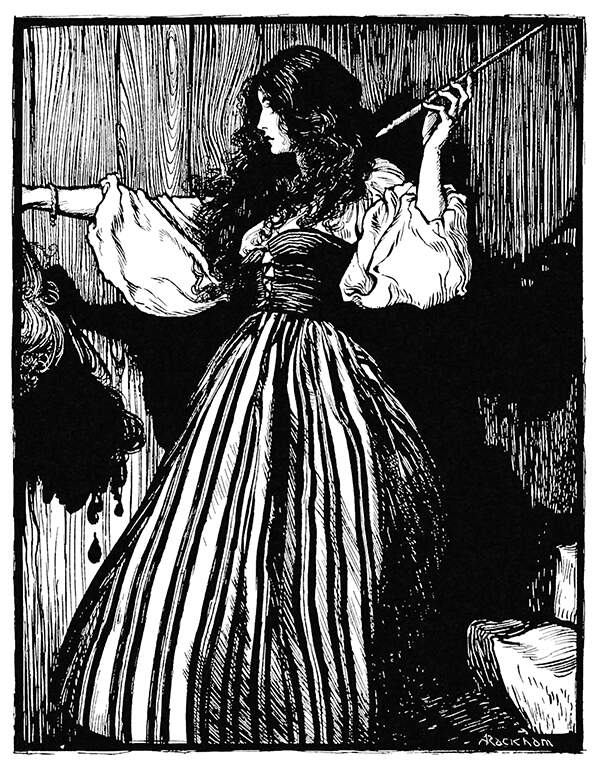
a woman holding a bleeding head and a magic wand
Arthur Rackham
A small chunk of ice from an inland lake - useful for chilling invocations.

A burning coal plucked from a hot fire - useful for light and fireball invocations.

The first branch to brush against you on a forest path - useful for invocations to grow foliage, or find your way when lost in the forest.

The shadow cupped between your hands - useful for shadow invocations.

A clear gemstone - useful for invocations of dispelling illusion or providing clarity.

A wand of petrified wood - useful for petrification invocations.

The tooth of a wild wolf - useful for invocations to summon wolves in the moonlight.

A pool of magma - useful for powerful invocations of fire and heat.

A detailed star map drawn with dust from a fallen star - useful for invocations of prediction, prophesy and illumination.

A flute carved from the wood of a fairy tree - useful for enchantment and bewitchment invocations.

Tuesday, November 18, 2025

Invoking the Great Spirits

In order to invoke you must first know the true name of a god, demon or great spirit.  This is well guarded information.  High priests and warlocks may know true names but common worshippers or clerics do not.  These names are often given in exchange for rigid oaths made to the spirit.  Spreading a spirit's name without permission is foolish.  

An image from Howl's Moving castle in which 3 people stand in the sky surrounded by spirits circling them
Howl's Moving Castle, Studio Ghibli
After speaking the spirit's name the invoker must make a short command or request.  For each word¹ used in this command or request the invocation's target number increases in difficulty by 2 (starting at base 10.)  The more words are used in the invocation, the more specific, focused, and powerful it is.

Each invocation requires a channeling focus.  The focus is what the spirit's magic flows directly through.  This must be a physical item relevant to the invocation performed.  

Invocations are immediate, present magic.  They cannot effect things at a great distance from the invoker or have long lasting active magical effects.

Howl's Moving Castle

Each great spirit has a set of domains (1-3 based on power.)  The invocation must fit within the domains of the spirit being invoked.  A fire demon cannot control anything outside of fire.  A god of hearth, home, and harvest cannot turn an enemy to stone.  

The invoker must have the same alignment as the spirit invoked or their check is made at disadvantage.

Failing an invocation prevents one from invoking for 3 days and causes immediate wild magic. 

¹ Except for a, an, the

Friday, November 7, 2025

Non Combat Resolution Games

A non combat resolution game is a kind of game that exists within the setting and is an accepted way to resolve disputes without involving direct violence.  Ideally it can be played between just two people and can be played somewhat diegetically  Here is a list of some of these games: (not all fulfill the diegetic requirement)

The Riddle Game

The advantage of the riddle game is the thematic strength and ability to be played entirely diegetically.  The disadvantage is not everyone is good at riddles and they can be pretty difficult to solve.  

Liar's Dice

This is the perfect Non Combat Resolution Game (except for on the thematic level, depending on the campaign.)

Strategy Games (Chess, Checkers, The Royal Game of Ur, Senet, Mancala, Ludus Latrunculorum)

These types of games are fun conceptually but take too long to be played like Liar's Dice.

Insult Games (Flyting, Senna, The Dozens, Rap Battle)

These types of games have the same advantages and disadvantages as the Riddle Game.

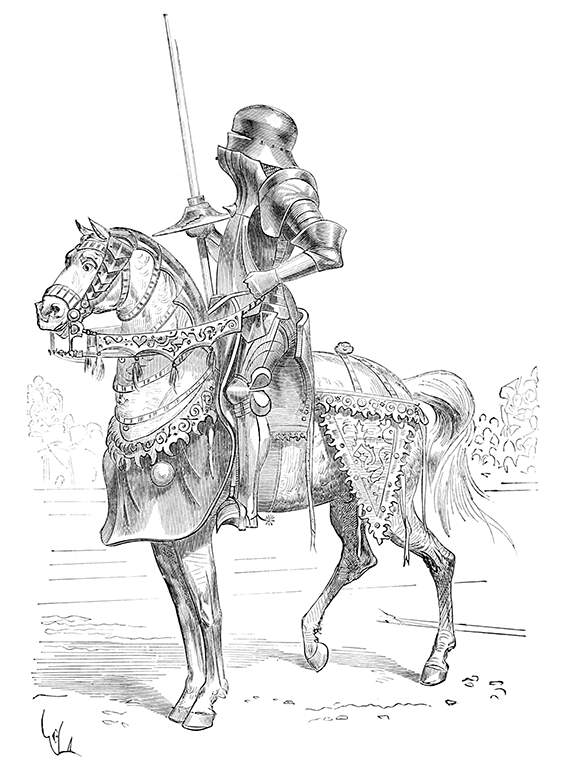
Athletic Games (Jousting, Archery, Foot Racing, Horse Racing, Chariot Racing)

These games are thematically strong depending on the campaign but don't meet the diegesis requirement.  They can be pretty quickly and easily resolved though.

An illustration of a jouster on a horse
Eugène Emmanuel Viollet-le-Duc


Tuesday, November 4, 2025

Alignment as Rock Paper Scissors

This is a tie breaking system I came up with for spells, but also as a potential universal tiebreaker. I don't think I will make any use of this system in Fire Tales. When you have a tie check alignments to see who wins:

Lawful beats Neutral.

Neutral beats Chaotic.

Chaotic beats Lawful.

If both are Lawful - Whoever has less to lose wins.

If both are Neutral - Whoever is more experienced wins.

If both are Chaotic - Whoever has more to lose wins.